
Penetration Grade Bitumen
Penetration Bitumen 60/70
A widely specified paving-grade bitumen with a balanced consistency for hot-mix asphalt, base and wearing courses, and general road construction.
View Details
A low-viscosity medium-curing cutback bitumen used mainly for prime coating and penetration of granular base courses before asphalt surfacing.
Cutback Bitumen MC-30 is a medium-curing liquid asphalt produced by reducing the viscosity of an asphalt base with a suitable petroleum distillate. Its low viscosity allows the binder to penetrate granular road bases more readily than hot paving bitumen.
MC-30 is primarily used as a prime coat on prepared granular base courses before placing an asphalt layer. Because it contains volatile petroleum solvent, handling, storage, transport and application require stricter fire-safety and environmental controls than conventional paving bitumen.
Current URMEX cutback range in this plugin: MC-30. Additional cutback grades should only be added when they are actually available and supported by a product specification.
| Property | Test Method | Unit | Requirement | Note |
|---|---|---|---|---|
| Kinematic Viscosity at 60°C | ASTM D2170/D2170M | mm²/s (cSt) | 30–60 | Grade-defining range |
| Flash Point, Tag Open Cup | ASTM D3143/D3143M | °C | Min. 38 | |
| Water | ASTM D95 | % | Max. 0.2 | |
| Distillate to 225°C (of total distillate to 360°C) | ASTM D402/D402M | % volume | Max. 35 | Current ASTM D2027/D2027M table |
| Distillate to 260°C (of total distillate to 360°C) | ASTM D402/D402M | % volume | 30–75 | Current ASTM D2027/D2027M table |
| Distillate to 316°C (of total distillate to 360°C) | ASTM D402/D402M | % volume | 75–95 | Current ASTM D2027/D2027M table |
| Residue from distillation to 360°C | ASTM D402/D402M | % volume | Min. 50 | |
| Viscosity of distillation residue at 60°C | ASTM D2171/D2171M | Pa·s | 30–120 | Primary current ASTM residue requirement |
| Penetration of distillation residue at 25°C | ASTM D5/D5M | dmm | 120–300 | ASTM permits this as an agency-selected alternative to residue viscosity for MC-30; both are not required |
| Ductility of distillation residue at 25°C | ASTM D113 | cm | Min. 100 | ASTM includes an alternate low-temperature acceptance note when 25°C ductility is below 100 cm |
| Solubility of distillation residue | ASTM D2042 / D7553 | % mass | Min. 99.0 |
Specification limits are editable and should be aligned with the buyer’s purchase specification and the shipment Certificate of Analysis.
The technical table follows the current ASTM D2027/D2027M-19(2024) MC-30 framework rather than mixing values from older or regional cutback tables. Key acceptance properties include kinematic viscosity, Tag Open-Cup flash point, water, distillation fractions and the properties of the asphalt residue.
Some road-authority or AASHTO-derived specifications publish narrower historical distillation windows for MC-30. If a buyer names such a specification, edit the table to that contract before quotation. Because cutbacks contain volatile solvent, also confirm local VOC, transport and road-authority restrictions before use.
MC-30 may be supplied in approved steel drums or suitable bulk/tanker systems designed for flammable petroleum cutback products. Packaging, labeling and transport must comply with the applicable dangerous-goods and destination-country rules.
Flammable solvent is present. Keep away from ignition sources, use bonded/grounded transfer equipment where required, provide ventilation and follow the current SDS. Do not use open flames for heating. Storage and application temperatures must remain within the product and equipment safety limits.
Its principal use is prime coating of prepared granular base courses before asphalt surfacing, where the low viscosity helps penetration and binding.
MC means medium curing. The number identifies the viscosity grade; MC-30 has a kinematic viscosity range of 30–60 cSt at 60°C under the standard specification.
MC-30 contains volatile petroleum distillate and has a specified minimum Tag Open Cup flash point of 38°C, so strict ignition-control, ventilation and SDS procedures are required.
Send your required grade, quantity, packing, destination and specification. The sales team can prepare a project-specific quotation.
A widely specified paving-grade bitumen with a balanced consistency for hot-mix asphalt, base and wearing courses, and general road construction.
View Details
A lower-viscosity paving bitumen graded by viscosity at 60°C and 135°C, suitable for applications that require easier pumping, spraying and…
View Details
A higher-viscosity paving binder designed for demanding hot-mix asphalt and road applications where VG-30 is specified by the project authority.
View Details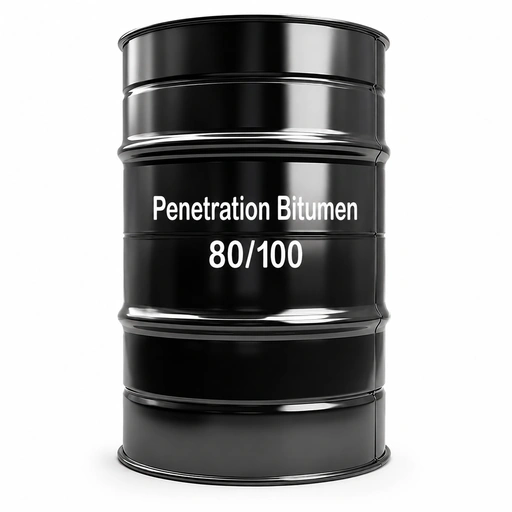
A comparatively soft penetration-grade paving bitumen used where greater flexibility and lower binder stiffness are required by the pavement specification.
View Details